Artists and Sustainability: Fay Pritchard
Posted on 20 January 2026
This month we asked Fay Pritchard to be featured in our ongoing series Artists and Sustainability, where we ask artists to share short responses about their work and how it might relate to climate change.
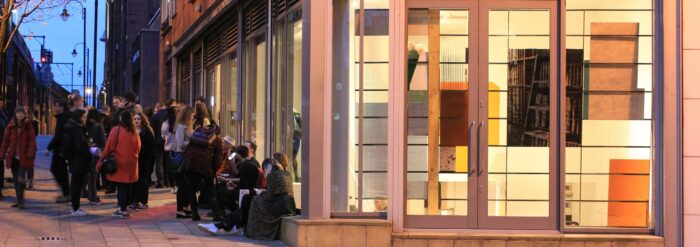
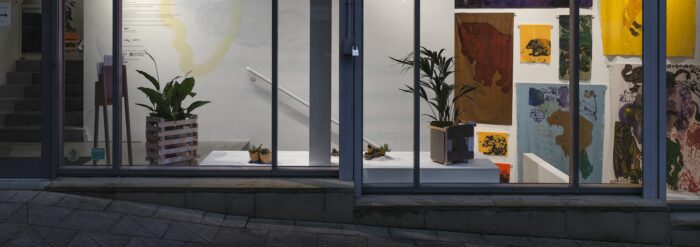
Fay is on the 2025-26 Cohort of Manchester School of Art Castlefield Gallery Graduate Mentees, a year-long programme developed and delivered by Castlefield Gallery to support artists in their first year after graduation.
In what ways do you feel your work might relate to issues of climate change and sustainability, in the content of your work, its narrative, conceptually or theoretically? How might it speak or challenge the public discourse?
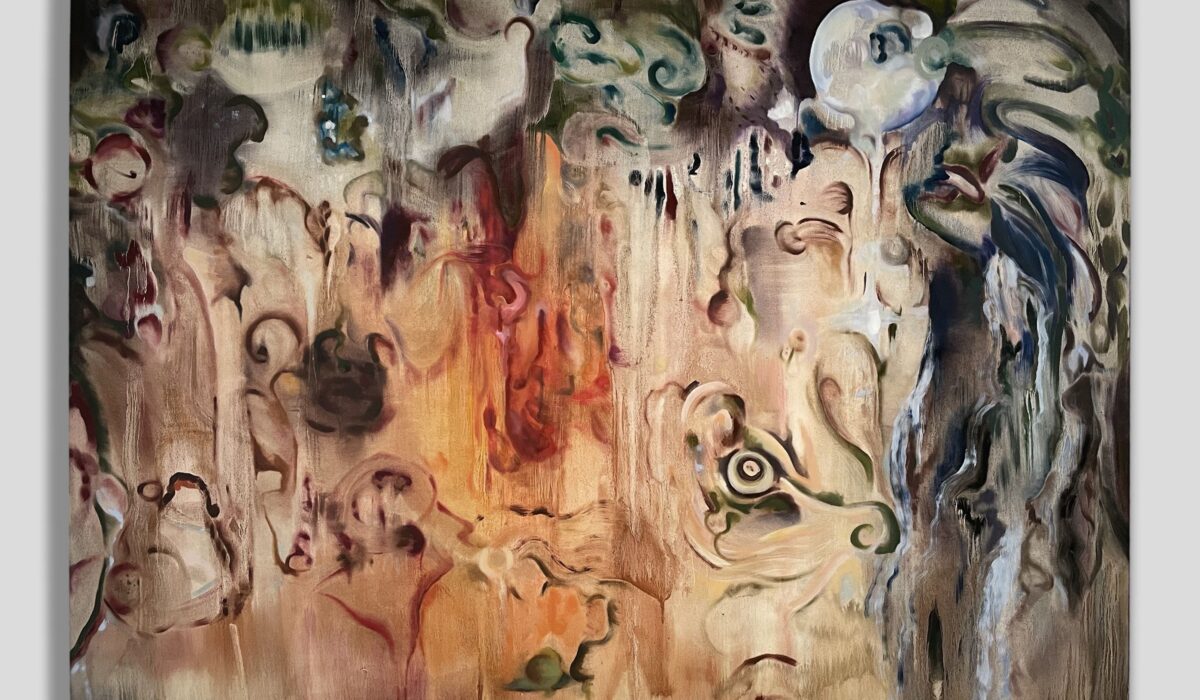
During a time of political and environmental crisis my practice allows me to question what role the environment holds in my own life through painting abstract and emotional landscapes. As humans, we are motivated by emotions over overwhelming statistics and pure rationality, and so I believe that how we treat the natural world begins with how we emotionally and culturally perceive it. My own memories of nature stem from landscapes in Japan and Britain, and so I’ve always found it interesting how across history and cultures, different relationships with nature have shaped traditions that prioritise care, protection, and intergenerational responsibility. In Japanese Shinto tradition, it is believed that there are countless Kami (spirits), that exists within all things nature, man-made, and even within ourselves. This full circle between us and nature implies that developing love and appreciation for nature, allows you to discover love and appreciation for oneself. Inspired by this, my painting practice is a form of worshipping the phenomenon that it is a miracle that we as humans are alive and alongside nature.
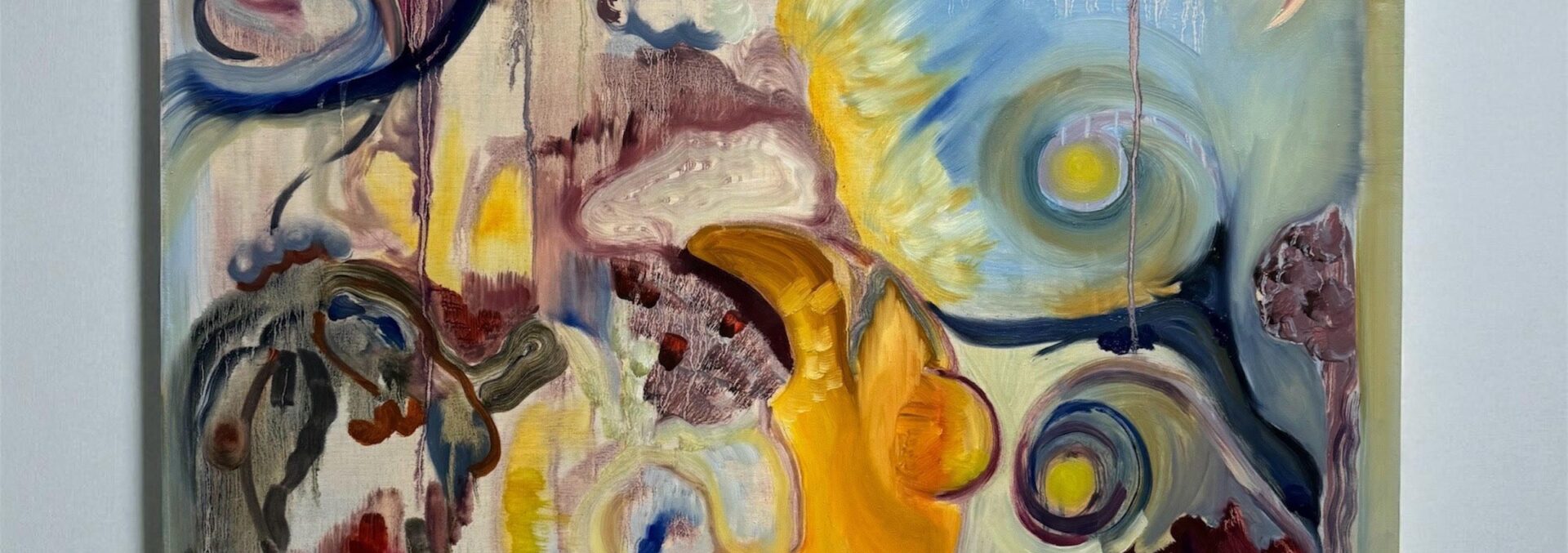
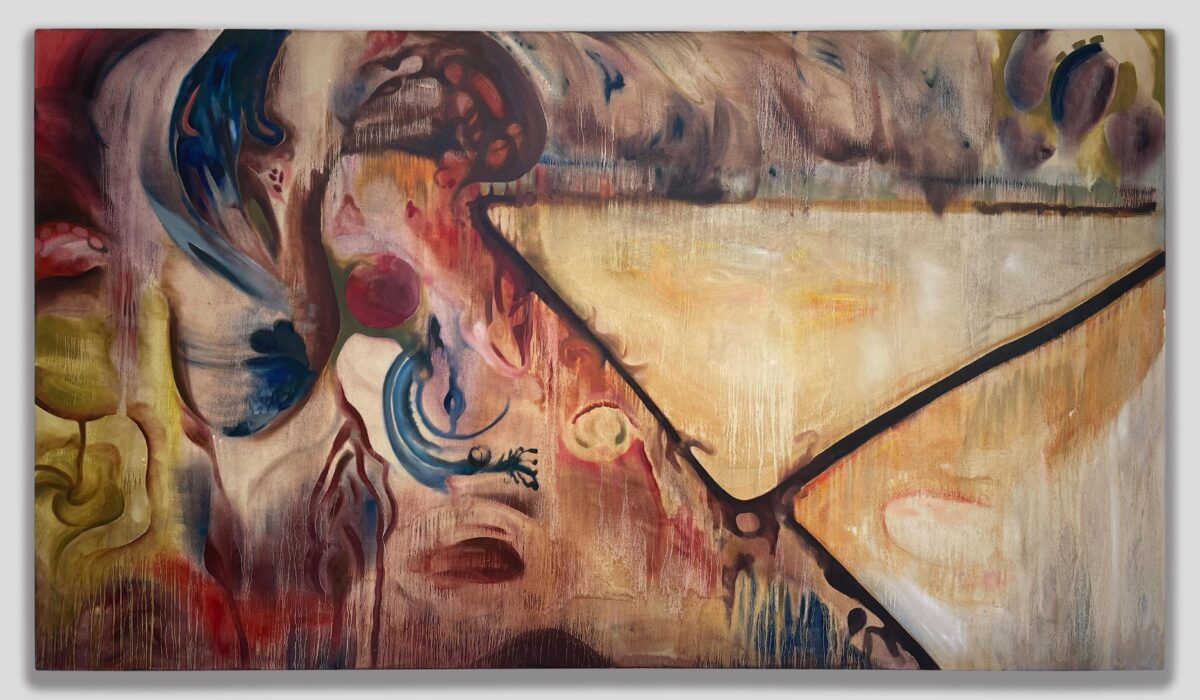
Painting on a large scale in oil paint on light calico, I form markings that bleed and layer, often leading to rather organic forms and colours. As I paint, I search for the feeling of discovery, like a place or a feeling, something you wish you could have discovered earlier, yet you never believed you could. This thought process mirrors onto the canvas, as the painting results in a glorified and mystical landscape, aiming to recreate superstition and hope that one senses when in the presence of a grand mountain or under the ceiling of a religious building.
If there is one thing I hope viewers gain from my work, it is the inspiration to develop their own personal relationship with nature, rooted in memory, imagination, and gratitude. By reflecting on what that relationship has been, and what it could become, this connection can grow into a gift, one that benefits us as humans, and shapes how we choose to treat the natural world in return. At least that is my intention for myself.
I’ve always found it interesting how across history and cultures, different relationships with nature have shaped traditions that prioritise care, protection, and intergenerational responsibility.Fay Pritchard
With regards to the materials, processes and techniques you use to produce your work, are there any practical decisions you make with regards to climate change and sustainability?
In many ways yes, though unfortunately, the material reality of oil paint and turpentine is an obvious contradiction to the environmental concerns at the core of my work. While this tension is something I actively acknowledge, I aim to be mindful in other areas of my practice, making more responsible choices wherever possible.
In terms of materials usage, I work very sparingly. My paint is heavily diluted with linseed oil, meaning a 37ml tube can last over a year. When a painting has been stored for a long period and begins to collect dust, I often paint over older works, allowing the canvas to regain new life. Alongside this, I try to maintain an efficient studio routine by working on multiple paintings at once. This approach reduces material waste, unnecessary transport, and improves both productivity and energy use compared to working on a single piece in isolation. Since last year, I have made a conscious decision to purchase materials only from brands that support environmental initiatives and demonstrate clear sustainability policies. I primarily use Jackson’s, as they offer carbon neutral shipping, sustainable packaging, and contribute to tree planting initiatives.
It is a personal goal of mine to continue discovering ways to reduce waste and eventually incorporate non-toxic materials into my practice. While jobs and other commitments can make environmental consciousness feel overwhelming or unattainable at times, I believe there are always small, meaningful efforts we can make. I actively encourage others to reflect on where they might reduce their own environmental impact, particularly when their work or lifestyle carries a large carbon footprint. Coming from a multi-disciplinary practice before I began painting mostly, I am used to trying different mediums to translate my ideas, I am eager and excited to see what mediums I can challenge next that is more environmentally friendly. Ultimately, I believe it is essential to openly discuss and critically reflect on our processes. Through these conversations, we can educate one another and begin to adopt better habits that support both artistic practice and environmental responsibility.
Rather than treating sustainability as an add on, [Castlefield Gallery] integrates environmental care into how it operates, curates, and engages the public, positioning itself as an active participant in the climate conversation.Fay Pritchard
How do you feel gallery, art spaces, artworks and artists might be able to contribute? What if any role do you feel they can play in a progressive conversation?
Different galleries have their own values of course, but I think it would be great if a standard was set, the more galleries who contribute to the conversation, the more other art spaces will notice and reflect on their own contributions. Based off my personal experience with galleries, I’ve seen various ways in which galleries can play an important role in the climate crisis. A great example is Castlefield Gallery as they have implemented policies such as the city’s 2038 net zero target, the gallery works to reduce energy use, limit waste, and encourage low carbon travel. Alongside this, Castlefield supports artists and communities through programmes that focus on low carbon art, creating a climate focused dialogue. Rather than treating sustainability as an add on, the gallery integrates environmental care into how it operates, curates, and engages the public, positioning itself as an active participant in the climate conversation.
Artists can also play an important role in the climate change conversation by shaping how people understand environmental issues, as well as by inspiring alternate ways of working that actively contribute to change. Rather than only illustrating the effects of climate change, artists have the ability to make these concerns felt, which can encourage a sense of responsibility. For example, Olafur Eliasson’s work shows how art can make climate change physically tangible, while also extending beyond the gallery space into real-world action. Projects like Little Sun connect artistic practice with renewable energy solutions, addressing both environmental and social inequality in a very direct way. Painters can also have an impact, as shown by John Sabraw’s practice, where material choice itself becomes an environmental intervention. By creating pigments from toxic waste removed from polluted waterways, his paintings actively contribute to environmental remediation.
Are there any tips or advice, anything you have learnt you might want to share with other artists or our audiences?
Sure! – Just to let you know, for context, I am at the beginning of what I hope is my long art journey and so this is what I learnt so far whilst recently graduating from my art degree. I believe that at the core of your practice, if you enjoy creating and are honest in your work, all the background noise doesn’t matter, if you can do that, you will keep on going and developing great work. Apply to applications that connect with you and your work, and practicing articulating your work to those in and out of the art circle. All types of work conceptually and materialistically have a place somewhere within art! If you feel like you or your art is a bit out of place, I’d say being the odd one out can even work to your advantage.
Finally, take care of yourself. Financial instability, comparison, and burnouts are real parts of this path. Find routines and boundaries that make the work sustainable long term. Success in art isn’t just about visibility or recognition, it’s about creating a life where you can keep making work that feels meaningful to you.
Images:
- Pale Waters, Oil on Light Calico, 76cm x 76cm, 2025
- Passing Thoughts, Oil on Canvas, 155 x 215cm, 2025
- Bleeding Skies, Oil on Light Calico, 150 x 190cm, 2025
Images courtesy of the artist.