Artists & Sustainability: Elaine Fisher
Posted on 1 April 2026
This month we caught up with Elaine Fisher to be featured in our ongoing series Artists and Sustainability, where we ask artists to share short responses about their work and how it might relate to climate change.
In what ways do you feel your work might relate to issues of climate change and sustainability, in the content of the work, its narrative, conceptually or theoretically. How might it speak to or challenge public discourse?
Whilst not directly focussing on climate change and sustainability such issues often reveal themselves in my work because of the materials I choose to work with. I mostly use post-consumer waste and natural, local products and these come with their own narrative histories that get incorporated into the thinking-making-research process. The work speaks from and to a psychological approach to ecological sustainability in which healing happens through deeper connections with ourselves and others, other humans and other species.
With regards to the materials, processes and techniques you use to produce your work, are there any practical decisions you make with regard to climate change and sustainability?
I think about what I am doing/making at all times and on many different levels. In terms of climate change and sustainability it is really a daily balancing act that starts domestically in the kitchen, walking to the supermarket etc. I make small practical decisions that gradually get incorporated into a more robust studio regime – things like filtering clay, fibres and paint residue from waste water and returning paper pulp, clay and plaster works to raw materials for re-use. I work manually where possible, which is a preference – to work with the body – as well as a conscious decision to save power. Deciding which geographical research paths to follow and how to traverse them is more tricky – curiosity can come with quite a travel-fuel burden and I’m working on this addiction.
In general, how do you feel galleries, art spaces, artworks and artists might be able to contribute? What if any role do you feel they can play in a progressive conversation?
I feel the main challenge to sustainability and the issue of climate change is a sense of being personally overwhelmed, by the enormity of the problems, the sense of individual actions being futile and time consuming and the lack of control over the actions of others. For an hour or so out of our week art spaces allow us to let go of personal responsibilities and sink into our collective imaginations. We can consider the pressing issues of the day through the lens of artwork without the burden of having to find practical solutions. From a psychological perspective this is essential active respite. The containment of the gallery, much like the therapist’s chair, allows our anxious minds to relax but not shut down. As we contemplate works of art, we open up to a different symbolic language which helps bypass ingrained resistance to change. Art helps grow our personal and collective consciousness, ensuring we don’t slip into the comforting arms of denial and inaction. Progressive conversations are great in terms of leadership but we shouldn’t forget that lasting change is embedded at a deeper level and art spaces have been holding this ground for millennia.
Are there any tips or advice, anything you have learnt you might want to share with other artists or our audiences?
I was delighted to discover recently that you can crush and dry used plaster casts into powder for new casting projects! I always thought there was a chemical change due to the heat emitted as the plaster is mixed with water but apparently not – or at least, this is reversible with oven drying.
Art helps grow our personal and collective consciousness, ensuring we don't slip into the comforting arms of denial and inaction.Elaine Fisher
Images
Title
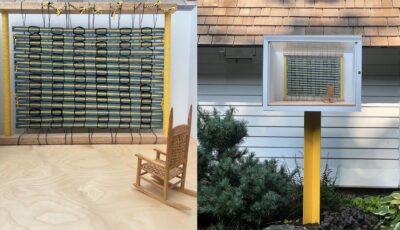
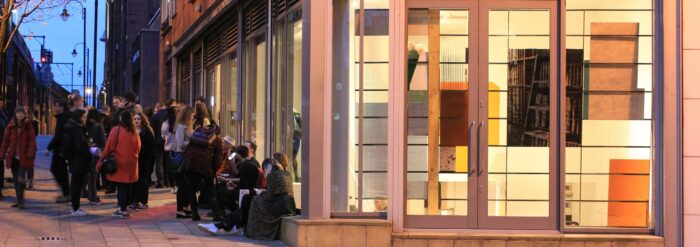
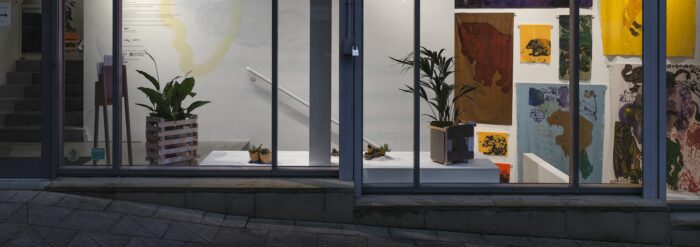
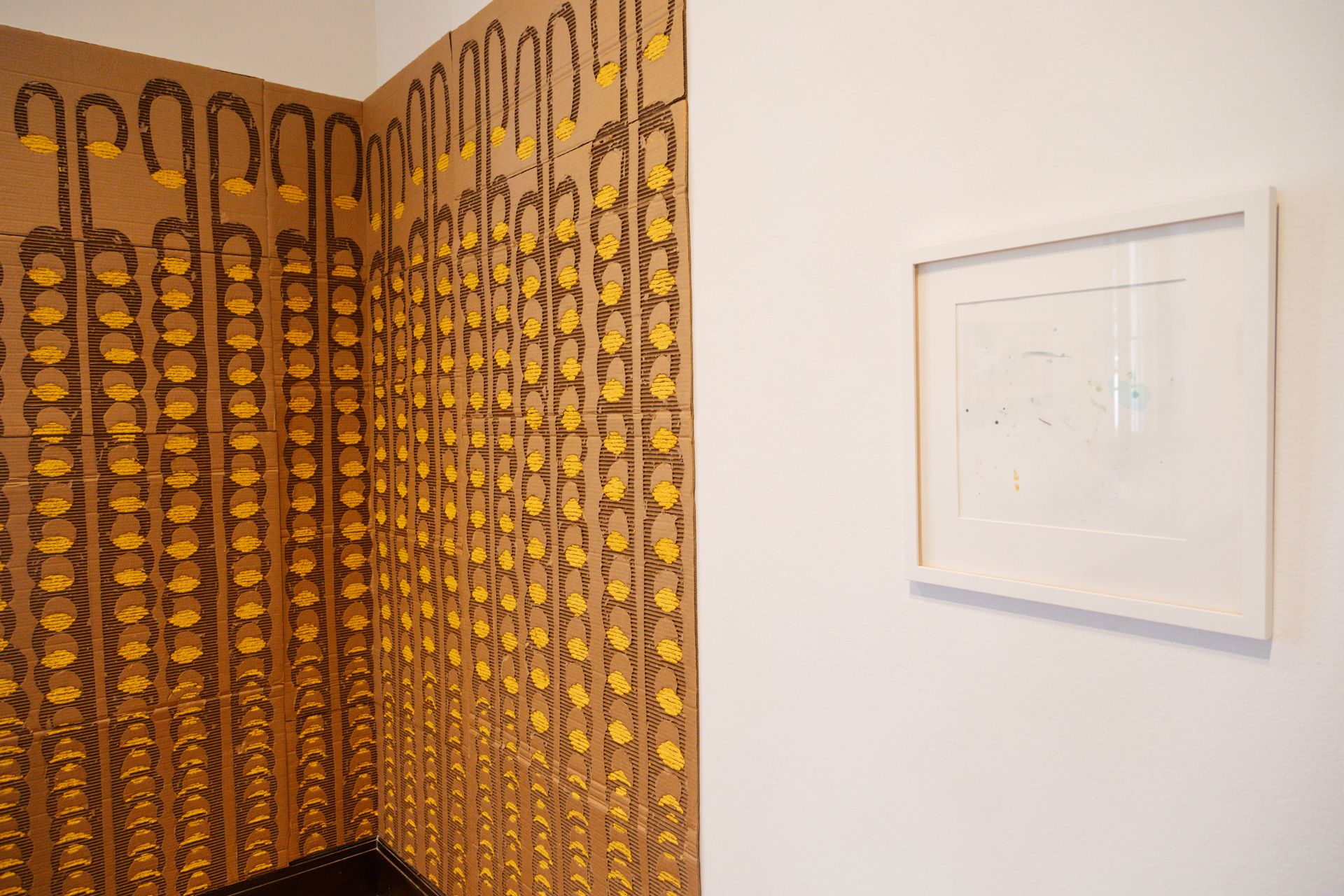
- Hysteria 1892 (wallpaper by Perkins & Co) / Blind Man’s Buff (2025), courtesy of Elaine Fisher
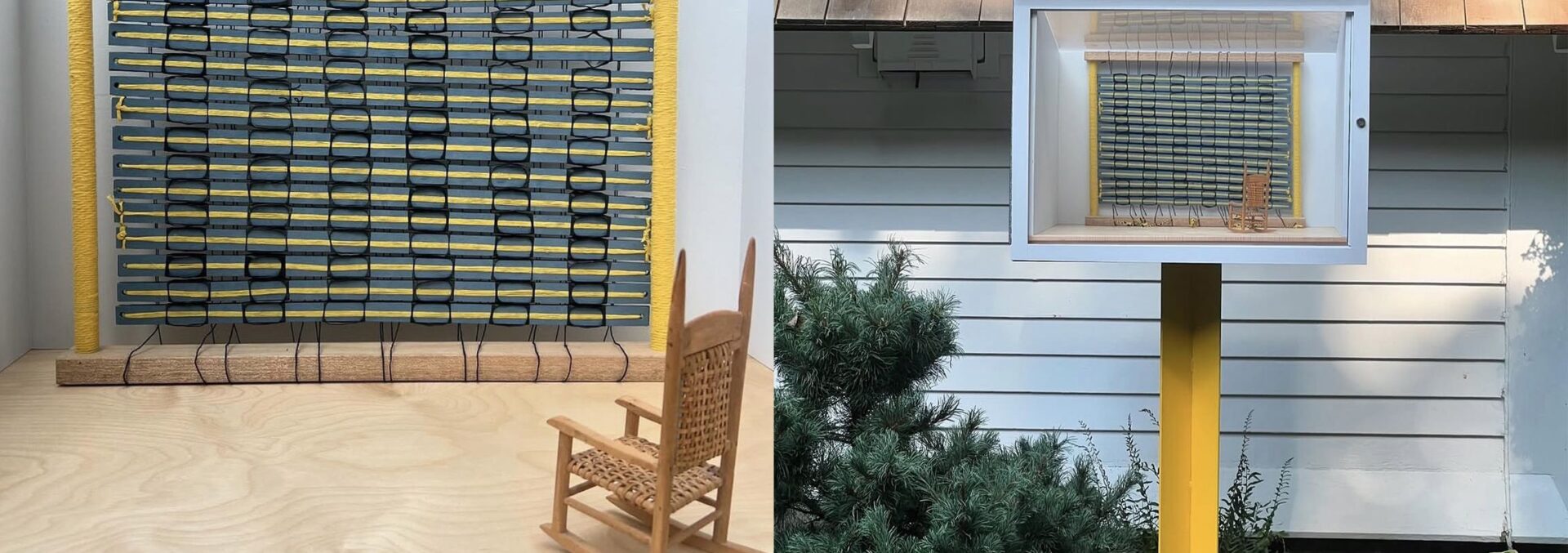
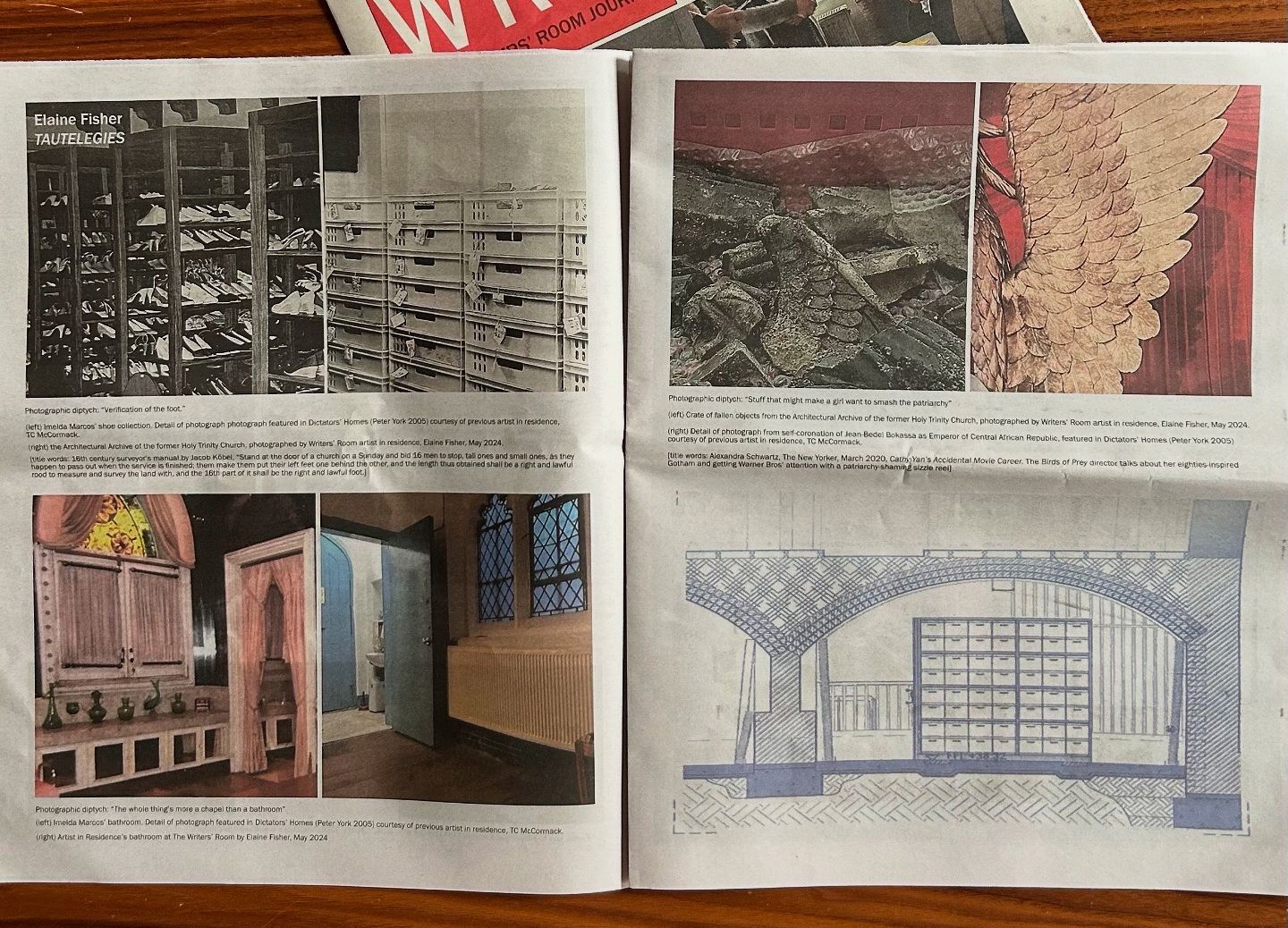
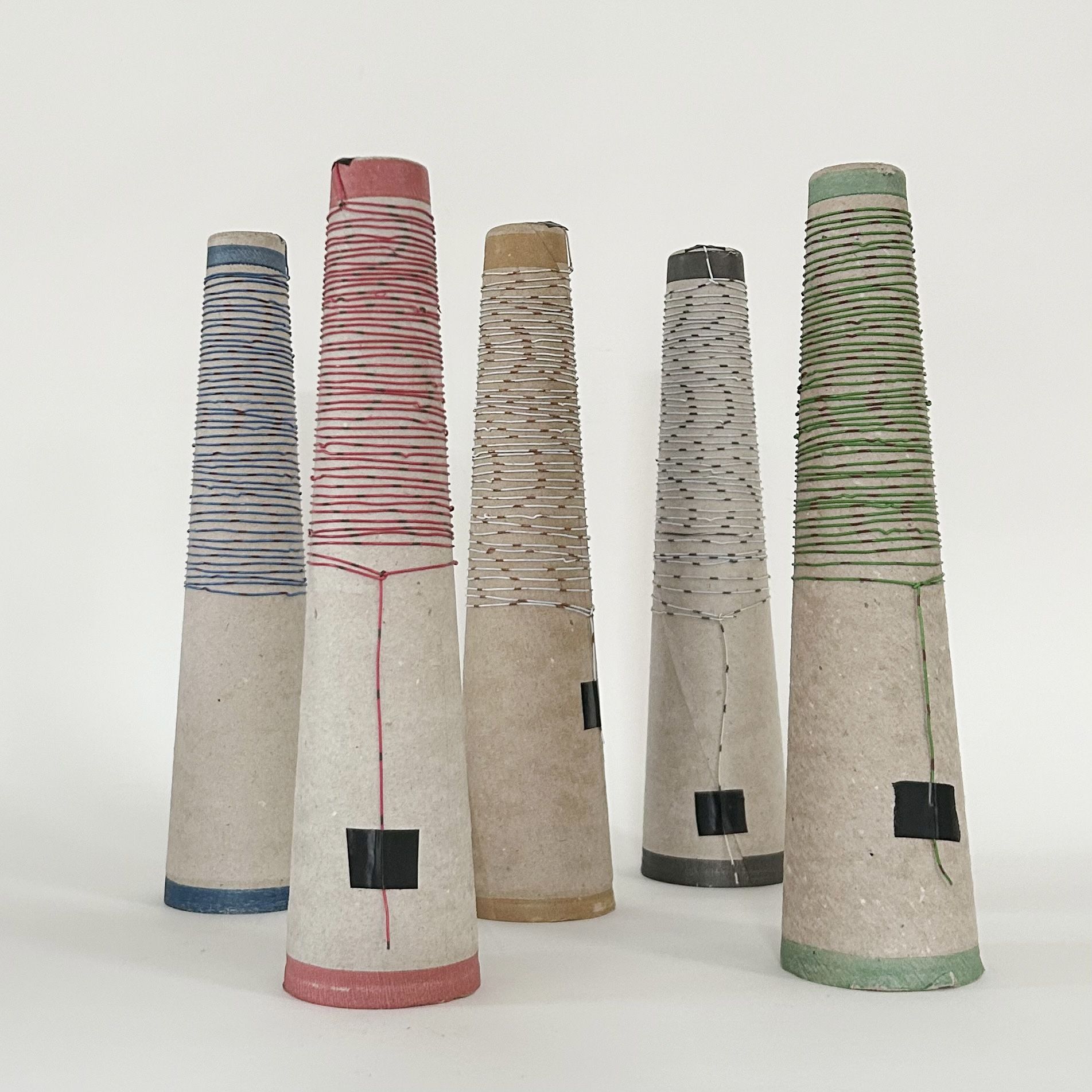
From top to bottom, left to right:
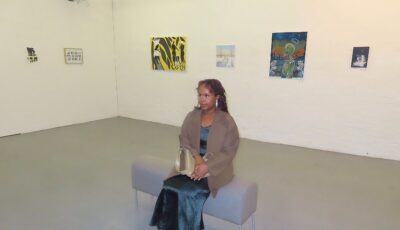
- Tautelegies (2024/5), courtesy of Elaine Fisher
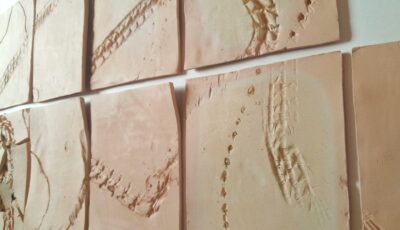
- Uniform Spectacle (2024) photo courtesy of Sue Ravitz
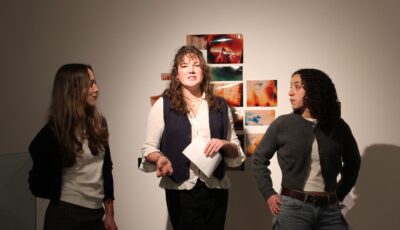
- Data Harvesting (cones of experience) (2024), courtesy of Elaine Fisher
Website
explore