Meet the People We Work With: Leni Cadle
Posted on 8 September 2026
Meet the People We Work With is a series of short conversations with the artists, volunteers, collaborators and supporters who shape Castlefield Gallery. It offers a way to get to know the people behind the work, their interests, and how working together helps make space for artists and new ideas to develop. This month, we caught up with Leni Cadle, who completed a 10-week Artist Development placement with us earlier this year via the University of Manchester.
Hi Leni! Tell us about what you do and your role with Castlefield Gallery?
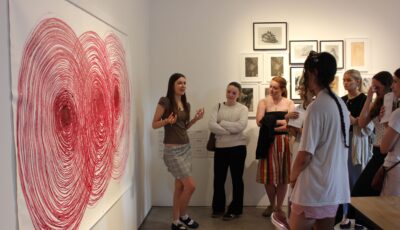
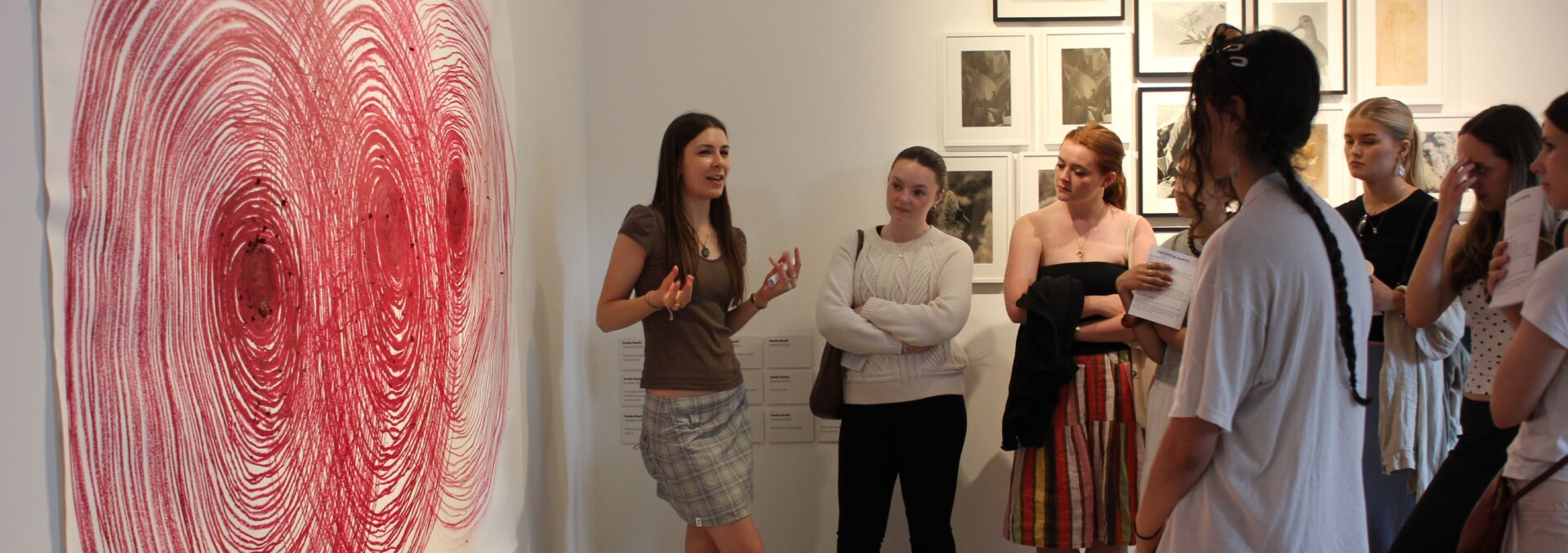
Hi, I’m Leni, and I’m an undergraduate in my final year studying Art History & History at Manchester University. Last semester, I completed a 10-week placement as Curatorial Assistant at Castlefield Gallery and I’m now continuing to volunteer at the gallery. My role on the placement included helping with exhibition installation, assisting at events, conducting condition checks, curatorial research, and delivering a student takeover event.
What made you want to start volunteering with Castlefield Gallery?
I’d been to a few exhibitions and tours at Castlefield Gallery last year, which I’d really enjoyed. The main push to apply for the placement came from two third year students who I met at the Art History writing group – Kacey and Fran – who were incredibly enthusiastic and positive about the gallery (they’d both done placements at Castlefield, and Kacey now works at the gallery). When the placement became available, I knew I had to apply. I had a fantastic time as Curatorial Assistant and I learnt so much while there, which is why I’ve stayed on as a volunteer.
What do you value about working with an artist-focused organisation?
Working with an artist-focused organisation has given me the opportunity to have so many valuable conversations with artists: from talking to volunteers who are artists, to conversations about curation with artists during exhibition installation, to conducting interviews for the student event, and visiting studios in Manchester on the patron trip. As an Art History student, I write about artists all the time, but I don’t get to speak to them (usually because they are either dead or too famous). Speaking to artists, being able to understand their intentions and inspirations, asking them questions and seeing work in progress is something I find hugely insightful.
What’s something you’ve learned through working with others?
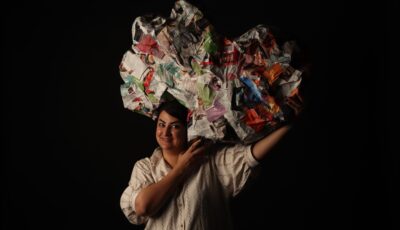
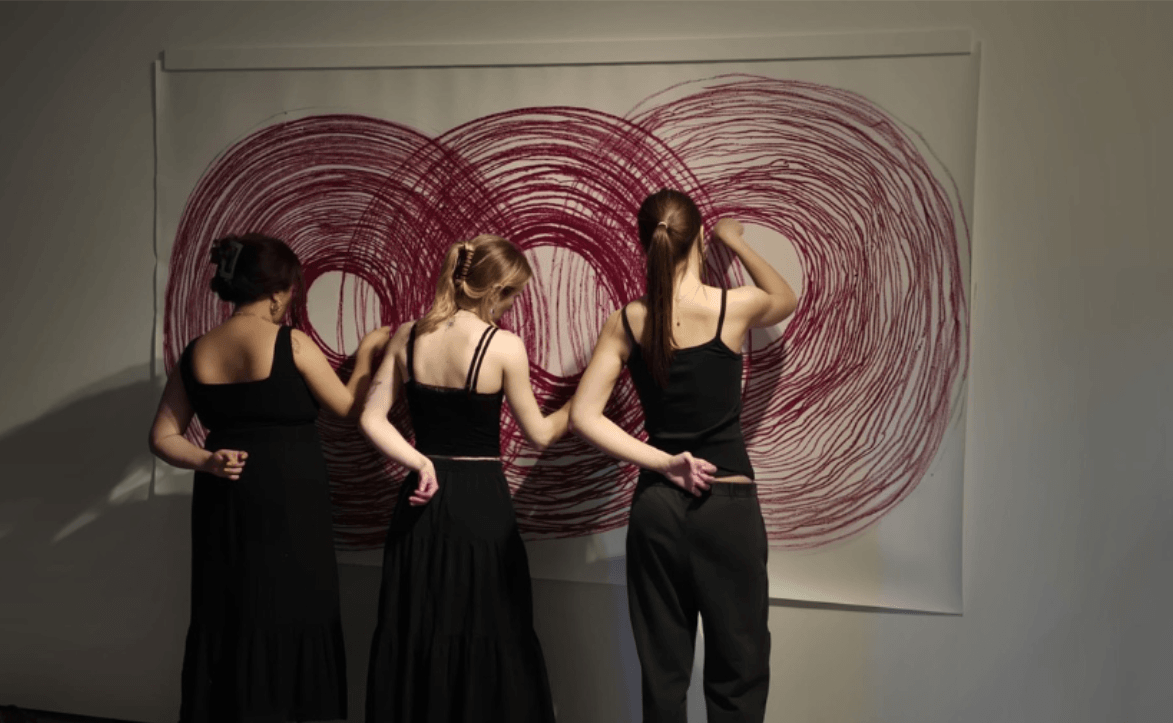
While I was on the placement, I had the opportunity to take part in a performance piece with artist Keziah Thomas-Mellor as part of the exhibiton Out Here. Colaborating alongside an artist to produce a work taught me so much. Conversations with Keziah in the lead up were important – understanding how prepare for the performance, as well as her concept and vision. Performing on the exhibition opening was both a vulnerable and meditative experience, and it was amazing to experience the invisible energy in the room. While I’ve always enjoyed performance art, the experience taught me to see performance art through a new lens as a performer, not just an audience member. From a curatorial perspective, the experience of collaborating with Keziah gave me an understanding of how establishing shared trust is just as important as the final performance. I’m grateful to Castlefield’s close relationships with artists, as it was an opportunity I’d be unlikely to have had in an institution with less artist-focus.
What keeps you engaged in the work you do?
I know I have to be involved with arts in one way or another. I think I’d explode if I wasn’t around things that inspire me.
What are you currently reading?
Poor Artists by Zarina Muhammad and Gabrille de la Puente
The Hollywood Superstar Review
Art in the After-Culture by Ben Davis
What are you hoping to explore or develop next?
Aside from academic work, I write for The University of Manchester’s Art History blog, as well as independently writing about exhibitions and art. Writing, for me, is a way of understanding how I respond to art, a sort of form of creativity. As part of the student-takeover event at Castlefield, I produced a series of written texts on the artists in the exhibition, aimed at our audience of UOM students. Conducting personal interviews with the artists was vital for building these texts, giving me an insight into the artists’ ideas, which I had to then think about how to communicate in my writing. Aware that writing on contemporary art can be wordy and inaccessible, these texts aimed to guide personal reflection, rather than telling the reader what to think. I hope to develop writing in the future, where I can make contemporary art engaging for wider audiences and build connection between artists and viewer.
One thing that helps you keep going?
My bike. It is faster than the bus and is like a friend.
Working with an artist-focused organisation has given me the opportunity to have so many valuable conversations with artists: from talking to volunteers who are artists, to conversations about curation with artists during exhibition installation, to conducting interviews for the student event.Leni Cadle
- Photo Courtesy of Florence Welch